

Учебник Spotlight 11. Student Book. Страница 78
Страница 78 — Ответы к учебнику Spotlight 11. Student Book
Across the Curriculum
1A. Look at the picture and listen to the rhyme. What do they tell us about the Great Fire of London? — Взгляните на картинку и послушайте стихотворение. Что они говорят нам о Великом лондонском пожаре?
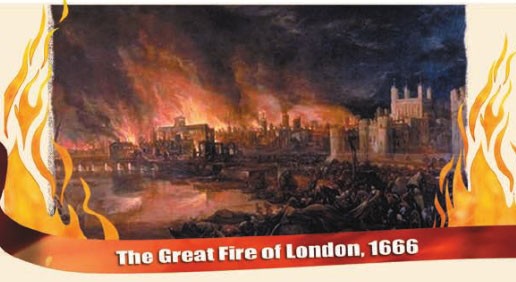
In sixteen hundred and sixty-six, old London burnt like rotten sticks. — В 1666 году старый Лондон сгорел дотла.
Возможный ответ:
They tell us that the Great Fire of London happened in the year 1666 and destroyed almost all in London. — Они говорят нам, что Великий лондонский пожар случился в 1666 году и уничтожил почти все в Лондоне.
1B. How do you think the fire started and why did it spread so quickly? Read the first paragraph of the text to find out. — Как вы думаете, как начался пожар и почему он так быстро распространился? Прочитайте первый абзац текста, чтобы узнать это.
Возможный ответ:
The fire started because of an accident in the king’s bakery. It spread so quickly because the houses were made of wood and were close together. — Пожар начался из-за происшествия в королевской пекарне. Он распространился так быстро, потому что дома были сделаны из дерева и находились близко друг к другу.
2. Read the text, then choose the best word (А, В, С or D) for each gap (1-7). — Прочитайте текст, затем выберите наилучшее слово (А, В, С или D), чтобы вставить в пробелы (1-7).
Ответ:
- A) come
B) turned
C) reached
D) brought - A) more
B) too
C) a lot
D) enough - A) greatly
B) badly
C) highly
D) dearly - A) In
B) Until
C) Over
D) Across - A) heavy
B) big
C) strong
D) hard - A) plus
B) up
C) added
D) along - A) arrive
B) show
C) point
D) direct
3. Listen to and read the text again. Explain the meaning of the words in bold. Use a dictionary. — Прослушайте аудиозапись и прочитайте текст еще раз. Объясните значение слов, выделенных жирным шрифтом. Используйте словарь.
LONDON’S BURNING!
«In sixteen hundred and sixty-six,
Old London burned like rotten sticks.»
In 1666, London was a city just waiting to burn. Narrow streets were overcrowded with buildings. Open fires and candles burned inside homes and businesses. A long, hot summer had just 1) come to an end, and the wood-built city was bone dry. On the evening of Saturday, 1st September, Thomas Farynor, baker to King Charles II, went to bed without properly putting out the fire in one of his ovens. Sometime after 1:00 am on Sunday morning, a spark from the fire’s embers ignited some straw on the bakery floor. Flames quickly engulfed the house in Pudding Lane. Neighbours attempted to put out the fire, but the flames were 2) too fierce. The fire began to spread.
At 4:00 am, London’s mayor, Sir Thomas Bloodworth, was woken up. He was advised to have all the neighbouring houses demolished, as this would stop the fire spreading, but the Mayor refused to give the order. He paid 3) dearly for this decision. By early morning, three hundred houses were on fire and winds from the east were causing the fire to spread with frightening speed.
4) Over the next three days and nights, the fire raged out of control. It took until the evening of Wednesday, 5th September, when the 5) strong winds finally died down, to bring the fire under control.
When the fire was totally extinguished on Thursday, 6th September, five-sixths of the heart of the city had been destroyed. Over 13,000 houses, 87 churches and 4 bridges, 6) along with many important buildings, such as St Paul’s Cathedral, were gone. Astonishingly, however, it is thought that fewer than ten people died in the blaze!
If you visit London today, you can see a tall column — called The Monument — commemorating the Great Fire. It stands at 202 feet tall — the distance from its location to the site of Thomas Farynor’s bakery — so if it fell over in the right direction, it would 7) point to the exact spot where the fire started!
ЛОНДОН ГОРИТ!
«В 1666 году старый Лондон сгорел дотла».
В 1666 году Лондон был городом, который только и ждал, чтобы сгореть. Узкие улицы были тесно заставлены зданиями. В домах и конторах горели открытые огни и свечи. Долгое жаркое лето только что подошло к концу, и город, построенный из дерева, был абсолютно сухим. Вечером в субботу, 1 сентября, Томас Фэринор, пекарь короля Карла II, лег спать, не потушив как следует огонь в одной из своих печей. Где-то после часа ночи в воскресенье искра от углей воспламенила солому на полу пекарни. Пламя быстро охватило дом на Паддинг-лейн. Соседи попытались потушить огонь, но пламя было слишком яростным. Пожар начал распространяться.
В 4:00 утра был разбужен мэр Лондона сэр Томас Бладворт. Ему посоветовали снести все соседние дома, так как это могло бы остановить распространение огня, но мэр отказался отдать такой приказ. Он дорого заплатил за это решение. К раннему утру горело уже триста домов, а ветер с востока заставлял огонь распространяться с пугающей скоростью.
В течение следующих трех дней и ночей огонь выходил из-под контроля. Только к вечеру среды, 5 сентября, когда сильный ветер наконец утих, огонь удалось взять под контроль.
Когда в четверг, 6 сентября, огонь был полностью потушен, было уничтожено 5/6 центра города. Исчезло более 13 000 домов, 87 церквей и 4 моста, а также множество таких значимых зданий, как собор Святого Павла. Удивительно, но считается, что в огне погибло менее десяти человек!
Если вы посетите Лондон сегодня, то сможете увидеть высокую колонну — так называемый Монумент — в память о Великом пожаре. Ее высота составляет 202 фута — расстояние от места установки до пекарни Томаса Фэринора, так что если бы она упала в нужную сторону, то указывала бы на то самое место, где начался пожар!
Возможный ответ:
- overcrowded: containing too many people or things — переполненный: содержащий слишком много людей или предметов
- bone dry: completely dry, with no water or liquid in, on, or around it — полностью сухой: абсолютно сухой, без воды или жидкости внутри, на нем или вокруг него
- putting out: to make something such as a fire stop burning — тушить: заставить что-то, например, огонь, перестать гореть
- spark: a very small piece of fire that flies out from something that is burning — искра: очень маленькая частичка огня, вылетающая из горящего предмета
- embers: pieces of wood that continue to burn after a fire has no more flames — угли: кусочки дерева, которые продолжают гореть после того, как в костре больше нет пламени
- engulfed: surrounded and covered something or someone completely — охватил: окружил и полностью покрыл что-то или кого-то
- on fire: burning — в огне: горящий
- extinguished: stopped a fire burning — погасший: прекративший горение
- column: a tall, vertical stone post, used as a support for a roof or for decoration, or standing alone as a monument (a symbol of respect for a special person or event) — колонна: высокий вертикальный каменный столб, используемый в качестве опоры для крыши или для украшения, или стоящий отдельно в качестве памятника (символ уважения к особому человеку или событию)
- commemorating: remembering and honouring — увековечивание памяти: память и почитание
4. Use the text to write a timeline of the main events during the Great Fire of London. Use your timeline to give the class a summary of what happened. — Воспользуйтесь текстом, чтобы составить хронологическую последовательность основных событий во время Великого лондонского пожара. Используйте получившуюся хронологию, чтобы представить классу краткое изложение произошедшего.
Возможный ответ:
- Saturday, the 1st of September (evening): Thomas Farynor (baker) forgot to put out properly the fire in one of his ovens. — Суббота, 1 сентября (вечер): Томас Фэринор (пекарь) забыл тщательно потушить огонь в одной из своих печей.
- Sunday, the 2nd of September (after 1 am): A spark from the fire’s embers ignited some straw on the bakery floor. Flames quickly engulfed the house and began to spread. — Воскресенье, 2 сентября (после часа ночи): Искра от углей воспламенила солому на полу пекарни. Пламя быстро охватило дом и начало распространяться.
- Sunday, the 2nd of September (at 4 am): The mayor was advised to have all the neighbouring houses demolished as this would stop the fire from spreading. The mayor refused to give the order. — Воскресенье, 2 сентября (в 4 часа утра): Мэру посоветовали снести соседние дома, чтобы пожар не распространялся. Мэр отказался отдать приказ.
- Sunday, the 2nd of September (morning): 300 houses were already on fire and the winds were causing the fire to spread with frightening speed. — Воскресенье, 2 сентября (утро): 300 домов уже горели, а из-за ветра огонь распространялся с пугающей скоростью.
- Wednesday, the 5th of September (evening): Winds died down and the fire was brought under control. — Среда, 5 сентября (вечер): Ветер утих, и пожар был взят под контроль.
- Thursday, the 6th of September: Fire extinguished. — Четверг, 6 сентября: Пожар потушен.
Дополнительный ответ:
On the evening of Saturday, the 1st of September, Thomas Farynor, baker to King Charles II, forgot to put out properly the fire in one of his ovens. Sometime after 1 am on Sunday, a spark from the fire’s embers ignited some straw on the bakery floor. Flames quickly engulfed the house and began to spread. At 4:00 am, London’s mayor was advised to have all the neighbouring houses demolished, as this would stop the fire from spreading, but the Mayor refused to give the order. By early morning, three hundred houses were on fire and winds were causing the fire to spread with frightening speed. On the evening of Wednesday, the 5th of September, when the strong winds finally died down, the fire was brought under control. On Thursday, the 6th of September, the fire was extinguished but the damage to the city was enormous.
Вечером в субботу, 1 сентября, Томас Фэринор, пекарь короля Карла II, забыл как следует потушить огонь в одной из своих печей. Где-то после часа ночи в воскресенье искра от углей воспламенила солому на полу пекарни. Пламя быстро охватило дом и начало распространяться. В 4:00 утра мэру Лондона посоветовали снести все соседние дома, так как это могло бы остановить распространение огня, но мэр отказался отдать такой приказ. К раннему утру горело уже триста домов, а ветер заставлял огонь распространяться с пугающей скоростью. Вечером в среду, 5 сентября, когда сильный ветер наконец утих, пожар удалось взять под контроль. В четверг, 6 сентября, пожар был потушен, но ущерб городу был нанесен огромный.
5. Portfolio: Imagine you lived in London in 1666. Write your diary entries for the days of the fire. — Представьте, что вы живете в Лондоне в 1666 году. Сделайте запись в личном дневнике о днях пожара.
Возможный ответ:
On the night of September 1, I was awakened by a shout of “Fire!”. I ran outside and saw that the city centre was on fire. Neighbours were rushing along the streets in panic. Nearby, a herald was shouting, urging us not to believe the false rumours spread by our enemies: the French and the Dutch. He said that there was indeed a minor fire in London, but the fire had already been localized. And if we saw the flames, it was burning something that couldn’t be saved. Yeah, that’s what we believed!
I grabbed my wife and children, took what I could carry of value, and we left the city in a hurry. For the next few days, the city was a living hell. The east wind spread fire throughout the centre of the city. The fire was simply unstoppable. They say that our valiant mayor was afraid to make the necessary decisions and refused to order the demolition of the houses closest to the burning centre. As a result, the whole city was on fire, and thousands of Londoners found themselves in the open air.
We are burning here, and do you know why? In the past, in our neighbourhood, each house had a well, and next to it, there was a small pond, from which you could also take water. Now that land was bought, the pond was filled in and now there are rich people’s houses there. Oh, no, not anymore, because they burned like rotten sticks. By the way, of course, I can’t complain, there was a well next to my house. But there’s no bucket! The bastards stole it. We also had a fire bell hanging in the street. Ring it all you want, there’s no help. The authorities should do something. And give me back my bucket, you freeloaders! Ah, it’s no use. I’ll have to start my life again somehow. I hope it works.
В ночь на 1 сентября меня разбудил крик «Пожар!». Я выбежал на улицу и увидел, что центр города охвачен огнем. Соседи в панике метались по улицам. Неподалеку кричал глашатай, призывая нас не верить лживым слухам, распространяемым нашими врагами — французами и голландцами. Он сообщал, что в Лондоне действительно произошел небольшой пожар, но огонь уже локализован. И если мы увидели пламя, значит, горело то, что уже нельзя было спасти. Ага, так мы и поверили!
Я схватил жену и детей, взял все, что мог унести ценного, и мы поспешно покинули город. Следующие несколько дней город превратился в сущий ад. Восточный ветер распространил огонь по всему центру города. Огонь было просто не остановить. Говорят, что наш доблестный мэр побоялся принять необходимые решения и отказался отдать приказ о сносе ближайших к горящему центру домов. В результате весь город оказался в огне, а тысячи лондонцев оказались под открытым небом.
Мы вот тут горим, а знаете, почему? Раньше в нашем районе у каждого дома был колодец, а рядом с ним — небольшой пруд, из которого тоже можно было брать воду. Теперь эту землю купили, пруд засыпали, и теперь там стоят дома богачей. О, нет, больше не стоят, потому что они сгорели дотла. Кстати, конечно, я не могу жаловаться, рядом с моим домом был колодец. Но ведра нет! Ублюдки украли его. А еще у нас на улице висел пожарный колокол. Звони сколько хочешь, помощи никакой не будет. Власти должны что-то сделать. И верните мне ведро, дармоеды! А, все это бесполезно. Придется как-то начинать жизнь заново. Надеюсь, получится.